
Evidence-Based Therapies for Auto Accident Injury Recovery
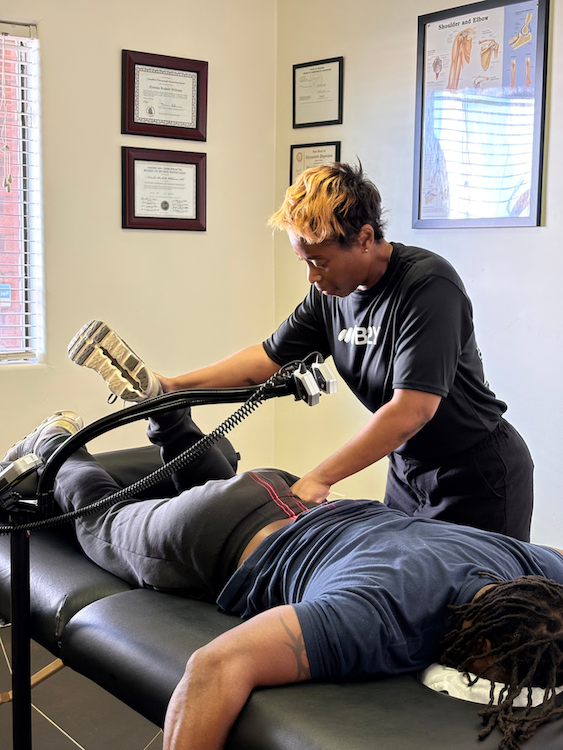
At B2Y, services are not offered as standalone treatments or preset packages. Every therapy we use supports a personalized injury recovery plan designed specifically for patients injured in motor vehicle accidents.
Care at B2Y is led by a board-certified brain injury and sports chiropractic physician and delivered through a coordinated, evidence-based approach focused on restoring function and reducing pain.
All services are used exclusively for personal injury patients.
A Coordinated Approach to Auto Accident Recovery
Auto accident injuries often affect multiple systems at once—muscles, joints, connective tissue, nerves, and the brain. Recovery requires more than a single technique.
Following a thorough injury evaluation, your treatment plan may include a combination of therapies selected to:
Therapies are adjusted as your condition improves and your recovery progresses.
Chiropractic Care After a Car Accident
Chiropractic care is used to address spinal and joint injuries caused by motor vehicle accidents. Trauma can lead to restricted movement, inflammation, and altered biomechanics that interfere with healing.
Chiropractic treatment may help:
Improve joint mobility
Reduce pain and stiffness
Support proper movement patterns
Decrease stress on surrounding tissues
At B2Y, chiropractic care is integrated thoughtfully into a broader recovery plan, not applied as a one-size-fits-all solution.
Neubie Technology at B2Y
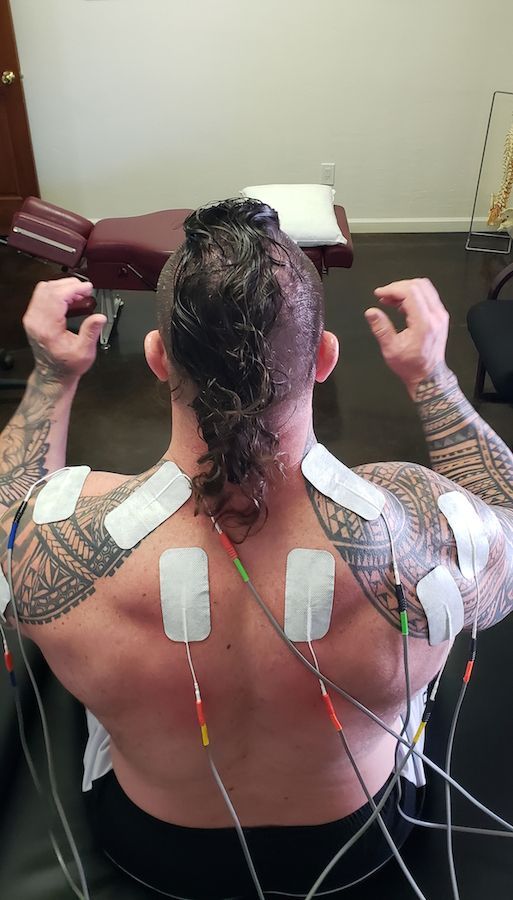
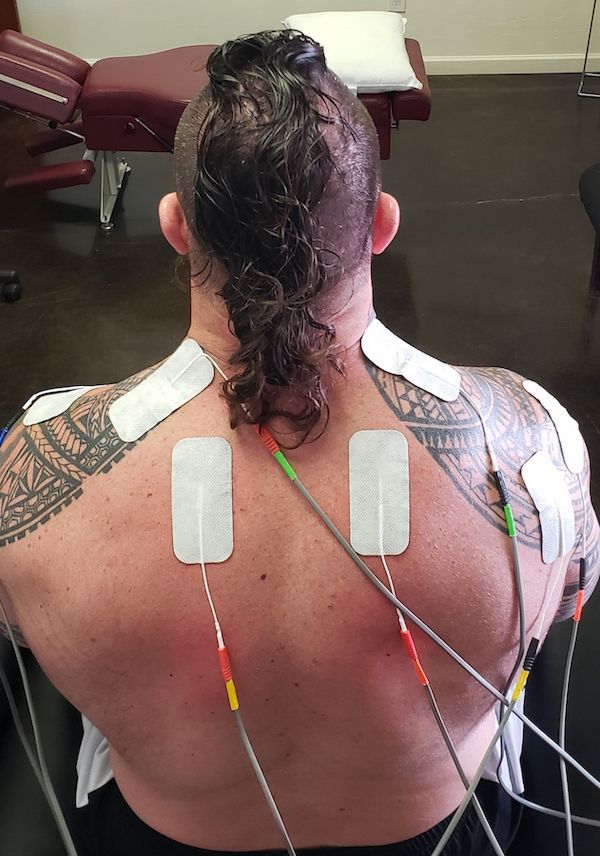
Neubie therapy is an advanced neuromuscular stimulation technology used to support recovery after injury by improving communication between the nervous system and muscles.
Neubie therapy may help:
- Reduce pain
- Improve muscle activation
- Restore movement patterns disrupted by trauma
This therapy is particularly useful when injuries affect coordination, stability, or muscle control following an auto accident.
Manual Therapy
Manual therapy uses hands-on techniques to treat soft tissue injuries and movement restrictions commonly caused by auto accidents.
Techniques may include:
- Myofascial release
- Active Release Techniques (ART)
- Trigger point therapy
Manual therapy can help reduce muscle tension, improve circulation, decrease inflammation, and restore normal movement patterns following trauma.
Laser Therapy
B2Y uses FDA-cleared Erchonia laser therapy to support healing after injury. This non-invasive, drug-free treatment is commonly used in auto accident and concussion recovery.
Laser therapy may help:
- Reduce pain and inflammation
- Promote tissue healing
- Support recovery from soft tissue injuries
Treatments are quick, comfortable, and applied based on clinical findings.
Dry Needling
Dry needling is a therapeutic technique used to treat muscle pain and movement dysfunction caused by injury. A very thin, sterile needle is inserted into tight or injured muscles (trigger points) to help release tension and reduce pain.
Dry needling may be used to address:
- Muscle spasms
- Soft tissue injuries
- Nerve-related pain
Dr. Williams uses dry needling as part of a targeted treatment plan when clinically appropriate.
Prescribed Rehabilitative Exercise
Exercise is an essential part of recovery after a motor vehicle accident. As patients progress, prescribed exercises help restore strength, flexibility, mobility, and overall function.
At B2Y:
- Exercises are customized to the individual
- Progression is guided by clinical findings
- Safety and proper timing are prioritized
Rehabilitative exercise supports long-term recovery and helps patients return to normal activity with confidence.
Care Designed Around Your Injury
Every service at B2Y is selected based on your specific injuries, symptoms, and stage of healing. There are no preset treatment plans and no unnecessary therapies.
Care is:
- Doctor-led
- Evidence-based
- Focused on function and recovery
Client Success Stories
"Natasha and her staff are exceptional. My wife and I have been going here years. Highly recommend for anyone looking to feel better."
J. M.
"I love this place! I definitely recommend it. They have everything you need and know all sorts of different therapies for different people..."
Bryan A.
"You cannot go wrong with Dr. Williams and her staff. They are knowledgeable and the nicest people you ever want to have rehab you. Two thumbs up."
Rickie M.
Learn More About Auto Accident Injury Care
Answers to Your Questions
Common Inquiries About Our Services
How long does treatment last after a car accident?
Treatment duration varies depending on the type and severity of the injury. Dr. Williams develops an individualized treatment plan for each patient and regularly reevaluates progress to ensure care remains appropriate and effective throughout recovery.
Do I need imaging (X-rays or MRI) after a car accident?
Not every car accident requires imaging. The need for X-rays or MRI depends on your symptoms, injury presentation, and clinical findings. Dr. Williams performs a thorough evaluation and determines whether imaging is medically necessary to ensure an accurate diagnosis and appropriate treatment plan.
Do you provide whiplash treatment for injuries after a car accident?
Yes. B2Y treats patients with whiplash and other soft tissue injuries related to motor vehicle accidents.
Whiplash commonly occurs when the neck is rapidly forced forward and backward during a collision. This sudden movement can strain the muscles, ligaments, joints, discs, and surrounding soft tissues of the neck and upper back.
Common symptoms of whiplash may include:
- Neck pain or stiffness
- Headaches
- Shoulder or upper back pain
- Reduced range of motion
- Dizziness
- Muscle tightness or spasms
- Pain that develops hours or days after the accident
Even a low-speed or “minor” car accident can cause whiplash-type injuries, and symptoms are not always immediate. Dr. Williams performs a thorough evaluation to identify the extent of the injury, document functional limitations, and develop an individualized treatment plan focused on reducing pain, restoring movement, improving daily function, and supporting long-term recovery.